
A HEAD FOR RECOVERY
Lauren Downie, 70, from Greater London, reveals how Brain and Spine Foundation supported her following a brain haemorrhage
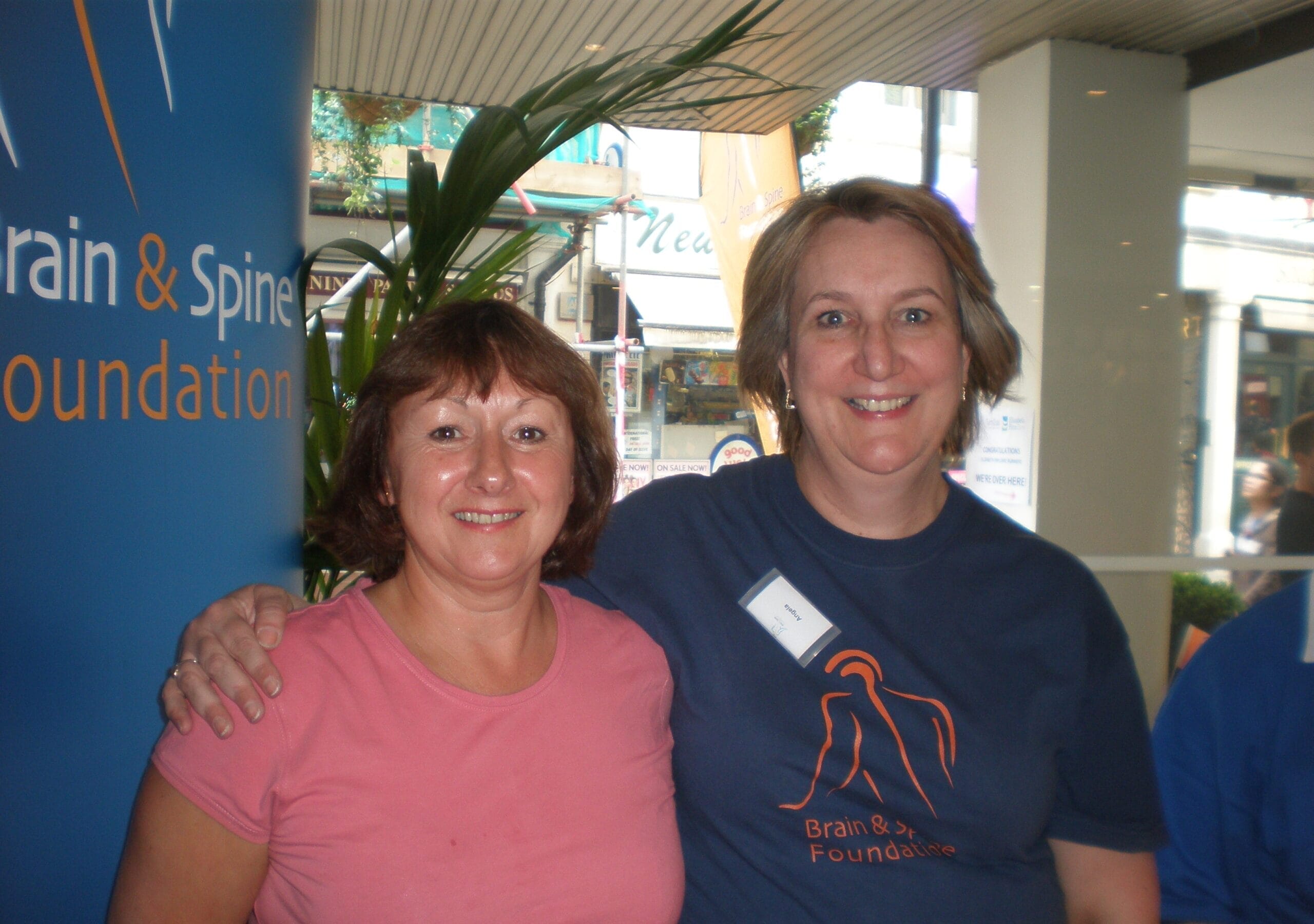
When Lauren Downie, 70, started experiencing extremely painful headaches in July 2004, she assumed it was migraines. “It was unusual for me and I kept thinking I should go to the GP about the headaches but then kept putting it off, thinking it was nothing serious.”
A few weeks later, she was playing tennis on a Saturday morning when she suddenly became very unwell. “I threw the ball up to serve and, as I did, I felt an explosive pain in my head as though something had snapped. I had to stop playing, feeling weak and faint, and was taken into the clubhouse by my friends. I remember saying to them, ‘I think I’m havin a brain haemorrhage’.”
One of Lauren’s friends called a family member to tell them what had happened, while another called 999 for help. “An ambulance arrived in no time at all. I was taken to A&E at my local hospital where I was seen by a doctor immediately then sent for a scan that confirmed I was having a subarachnoid haemorrhage, which is a life-threatening bleed into the space surrounding the brain and the tissues that cover it (the subarachnoid space). I was then blue lighted to King’s College Hospital in London, where I was given a bed on the emergency care ward. I had started to lose consciousness by this point so have no memory of the journey there.”
Lauren was woken by a specialist doctor, who told her they had discovered the haemorrhage had been caused by a brain aneurysm – which is a swelling in a blood vessel in the brain – that had ruptured, and they were going to perform surgery immediately to stop the bleed on her brain. “I was still semi-conscious at that point but remember panicking, thinking ‘I don’t want brain surgery’. It was quite a shock.”
The haemorrhage was treated by intravenous insertion of platinum coils into the aneurysm to stem the bleeding and to seal it off.
“The surgery went really well, then I remained at King’s College Hospital for ten days to recover before being sent back to my local hospital.”
Two days later, Lauren was discharged from hospital care. “I was sent home and just left to get on with it. I wasn’t told what to expect or given any guidance on recovery as I thought I would be, and the only follow-up appointment I was given was with the neuroradiologist, who had done the surgery, in several months’ time.
“I started to really struggle as, although I wasn’t in pain, the experience did have a huge effect on me emotionally. I had thought I would be fine within a few weeks like with any other surgery, but it takes a long time to recover from a brain haemorrhage, so I was very fatigued for a long time. The shock of it all also started to set in and was a lot to process. In hindsight, I was suffering with post-traumatic stress disorder from what I had been through, so I had to learn to cope with that.
“Without proper guidance on how to look after myself and how long recovery should take, I also went back to work far too soon as 12 weeks after the surgery, and it was too much. I struggled with the bright lights and the noise in the office. I looked okay so people thought I was okay and everyone was expecting more from me than I could actually handle. I felt very overwhelmed.”
Lauren decided to take some time off work and reach out to the Brain and Spine Foundation, which she had been given a booklet about by the consultant who had done her surgery. “I realised I wasn’t recovering as quickly as I anticipated, so I phoned them up for some support and advice and spoke to the neuro-nurse on the helpline. She was absolutely brilliant – so empathetic, caring and knowledgable – and she explained so much to me that actually made sense, about what I was going through and dealing with, and what I should expect.
“It was great to talk to someone who knew what they were talking about and we ended up having quite a long chat. The same nurse then called me every couple of weeks to see how I was getting on. She said they were there whenever I needed them and could call any time, which was so reassuring. Through those chats, I started to learn to accept that what had happened and what was happening to me now was perfectly normal, and it really helped with my PTSD.”
A few months after her initial phone call, Lauren went to the charity’s offices to meet with the team. “They were talking about the London marathon and how they recruited people to run it to raise funds for them, and they asked if I would like to come and meet them at the 2005 event to cheer on the runners. I said I would love to. It was a wonderful day, seeing the crowd and the people running for charity, and the atmosphere was incredible.
“Unfortunately, I couldn’t go to the 2006 marathon as I has just come out of hospital after having a second surgery to do follow-up coiling after a scan found some of the initial coiling had settled, so I let the organiser know I couldn’t make it. She joked as a forfeit I could run the marathon for them next year. Even though it was a joke I said, ‘Okay, I can do that!’ and started running two weeks later with a local running club.”
In 2007, Lauren completed the London marathon to raise money for the chairty.

“That was my first marathon, and I have now done a total of five London marathons to raise money for the charity. I also became an ambassador for the charity ten years ago, which has involved doing talks at events and raising awareness of the work they do, and since 2020 I have been volunteering as a peer support worker, running weekly meetings with people from all over the country online so they can connect with others in similar situations and talk about what they’re dealing with and how they cope with their neurological conditions. I have also became a trustee for the charity.
“Finding the charity has benefitted me in a massive way and it’s wonderful to feel useful and helpful now by promoting their work in any way they can. Starting running and getting involved in fundraising for them really gave me something positive to focus on during a difficult time, and it’s also wonderful to be able to give something back to a charity that has given so much to me. There’s not much support for people living with neurological conditions in the UK, and I feel very grateful to have found the charity. Having someone to talk to who understood and could give me acceptance and understanding in those early days meant everything to me and really was an absolute lifeline, and I want to help others find that vital support at a time when they need it the most.”

THE CANDIS BIG GIVE AMOUNT RAISED: £25,639
- The Brain and Spine Foundation gives guidance and support for anyone affected by any neurological condition or caring for someone who does.
- One in six people in the UK live with damage to their brain, spine or a neurological condition, and nearly 300,000 people are on NHS neurology waiting lists. Many face huge delays in diagnosis, discharge from the NHS without support or aftercare, and deteriorating mental health.
- The money raised will go towards a specialist neuro nurse-led helpline, which is free to access by telephone or email and offers expert emotional and practical support and information to people affected by brain, spine or neurological conditions. It will help fund four Neuroscience Nurses to respond to over 770 of the 2,500 call and emails expected over the coming year.
- The neuroscience nurses have a wealth of experience supporting people affected by neurological conditions within the NHS, with over 70 years of experience between them.
- Over 95 per cent of people who use the helpline say they feel supported, listened to and more able to manage their symptoms and concerns.
- Visit brainandspine.org.uk for more.
WOULD YOU LIKE TO HELP IN SUPPORTING HEALTH CHARITIES
Your gift subscription will help to support health charities
SUBSCRIBE